







By AMHG Magazine – Where AI Meets the Heartbeat of the Community
When a clinic door shuts its doors in Haiti, a grandmother in Brampton feels a tremor in her spirit.
When HIV medication runs out in South Africa, a nurse in Scarborough lies awake at night, clutching her phone, praying that the next WhatsApp message from home isn’t a tragedy.
What’s happening to the U.S. Agency for International Development (USAID) is not just bureaucratic reshuffling. It is not a distant “foreign policy issue.” It is a Black issue. A Caribbean issue. An African issue. And because so many of our families are woven across borders, it is deeply — unmistakably — a Canadian issue too.
This is about our families, our futures, and whether Black communities worldwide will have a fair chance to live, heal, and thrive.
What USAID Did — And Why It Mattered for Black Lives
For more than 60 years, USAID has been one of the world’s strongest engines for global public health, especially in countries where Black people are the majority. A landmark Lancet study estimated that USAID programs helped prevent over 91 million deaths in the last two decades — 30 million of them children.
Another independent analysis warns that if current cuts continue, more than 14 million additional people could die by 2030, including millions of Black children under five.
Most of these lives are in places many of us call “back home” — sub-Saharan Africa, the Caribbean, and parts of Latin America. These regions carry the world’s heaviest burdens of HIV, tuberculosis, malaria, maternal death, and severe childhood malnutrition.
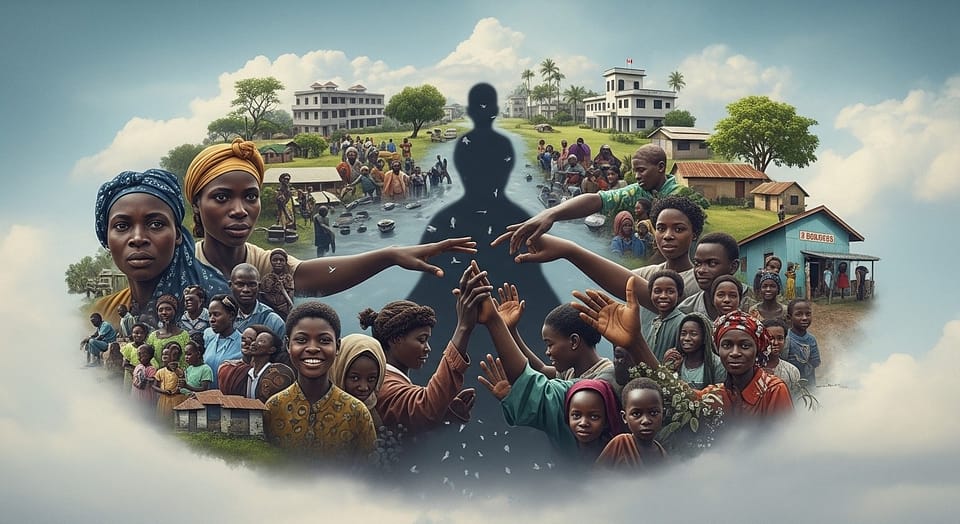
When USAID collapses, the consequences don’t just show up in spreadsheets and statistical graphs. They appear as missing faces at family reunions, empty desks in schoolrooms, and funeral programs passed quietly through WhatsApp chats.
A Mother’s Choice in Kakuma — When Help Disappears
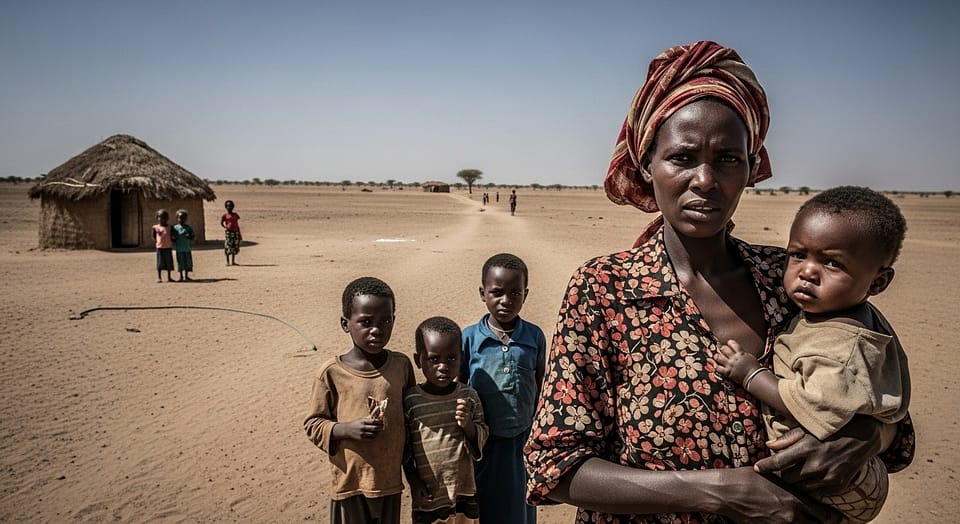
In the Kakuma refugee camp in Kenya, a mother named Rovina watches her daughter Jane’s fragile body weaken after food rations were slashed and community health workers were pulled from the field. Her agonizing journey is documented in the short film Rovina’s Choice, produced alongside renowned surgeon and global-health leader Dr. Atul Gawande.
Just a few years ago, severe malnutrition was becoming a solvable crisis. With simple tools — a measuring tape, a scale, and fortified therapeutic foods — community workers were cutting death rates for severely malnourished children from around 20% to under 1%.
Then the money stopped.
Food aid in some camps plummeted to 40% of minimum daily calorie requirements. Community health workers vanished. Clinics once equipped to catch danger early now see children only when they are near death.
This leaves mothers like Rovina with an impossible, heartbreaking choice:
Stay home and watch all her children starve slowly, or walk for hours to a distant clinic with her sickest child, leaving the others alone with almost no food.
This — not a headline, not a political debate — is what the dismantling of USAID looks like on the ground.
How the Cuts Hit Black Communities — Here and “Back Home”
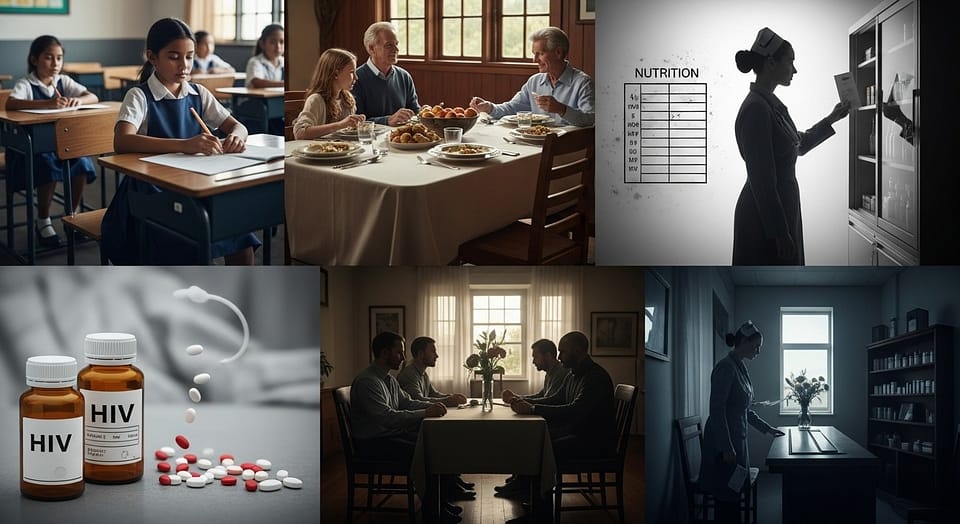
Across Canada, we hear echoes of this crisis in the personal stories of our own communities.
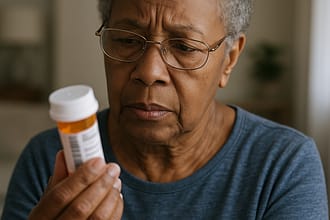
Marcia, a personal support worker in Brampton, sends money each month to her cousin in Haiti. Her cousin once received HIV medication regularly through a clinic supported by U.S. foreign aid. Now, shipments are delayed, staff are gone, and she’s forced to ration pills — a dangerous practice that leads to treatment failure and increased transmission. UNAIDS reports similar disruptions in multiple countries.
Devon, a security guard in Toronto, lost his younger brother in Nigeria to tuberculosis. USAID-funded programs once supported diagnostics and community outreach. WHO now warns that due to global aid cuts, TB services are shrinking in high-burden regions — a setback that will cost lives for years to come.
Althea, a new mother in Mississauga, worries for her sisters in the Caribbean. Black women already face higher risks during pregnancy and childbirth. In the U.S., Black mothers are three times more likely to die from pregnancy-related complications. Canada lacks comprehensive race-based maternal health data, but advocates fear similar disparities. Now imagine these pregnancies unfolding in health systems stripped of midwives, emergency care, and essential supplies.
When foreign aid disappears, pre-existing inequalities don’t stay steady — they explode.
Public-Health Data Behind the Pain
The numbers are as devastating as the stories:
- USAID helped reduce deaths from HIV, TB, malaria, and vaccine-preventable diseases across Africa and the Caribbean.
- In 2024, someone died of HIV-related illness every minute. Children were infected daily — primarily because prevention and treatment services were disrupted.
- Analysts warn that U.S. foreign-aid cuts could lead to 14 million additional deaths by 2030, many of them Black children.
Dr. Gawande calls this a form of “public, man-made death” — not the sudden impact of a bomb, but a quiet, steady rise in funerals and empty chairs at dinner tables.
For Black communities across the globe, that phrase is painfully familiar. Our suffering has been rendered invisible through policy choices for generations.
From Outrage to Action — What We Can Do
It’s easy to feel powerless in the face of billion-dollar decisions made in Washington boardrooms.
But Black communities are not powerless. We never have been.
Here’s how we fight back:
1. Tell the Stories — Loudly
Share what’s happening in Kakuma, Haiti, Jamaica, Nigeria, and beyond. Statistics move policymakers. Stories move the world.
2. Demand Canada Step Up
Canada and other governments can increase their own global health commitments. Black Canadians have the right — and responsibility — to demand foreign policy that reflects our lived realities and global family ties.
3. Support Frontline Organizations
HIV clinics in the Caribbean, maternal health programs in Africa, youth mental-health services across the diaspora — many are fighting for survival. A small monthly donation can keep medicine in stock and clinic doors open.
4. Fight Health Inequity Everywhere
The same systems that overlook Black mothers in Toronto also overlook Black children in Ghana. Health justice is global. When we demand race-based data, culturally safe care, and accountability here, we strengthen the fight everywhere.
5. Use Technology for Good
AI tools — including those AMHG is building — can help track stories, connect donors, support telehealth, and amplify community voices when official systems fail.
Our Health, Our Power
The dismantling of USAID is not an accident. It is a political decision with a racial footprint — one that will cost Black lives in the Global South while leaders insist “no one is dying.”
We know better.
Every Black family with relatives back home knows the dread of crisis unfolding through a shaky video call. Every community leader who has buried someone too early understands that prevention is priceless, and cuts to care are never neutral.
At AMHG Magazine, we refuse to look away.
We will keep telling these stories.
We will keep breaking down the data.
We will keep shining a light on the quiet, preventable deaths — and the loud, unstoppable resistance of our people.
Because this isn’t just about what governments choose to fund.
It’s about what we choose to fight for.
Your voice matters.
Your vote matters.
Your advocacy, your remittances, your shares, your conversations — they all matter.
The dismantling of USAID is a warning.
But it is also a call.
A call for Black communities — from Toronto to Tobago, from Lagos to London — to rise and say:
We will not let our families be written off.
Not now.
Not ever.