








STOP THE SILENT KILLER: The Heart Disease Crisis Stealing the Lives of Black Women
By Afro Mosaic Health Guide (AMHG)
There are some numbers in life you can overlook — and then there are the numbers that stop you cold.
Heart disease belongs to the second category.
This crisis does not whisper.
It does not tap politely on the shoulder.
It shouts, it screams, and it demands that we finally listen.
Because in America today, heart disease is not just a health problem for Black women.
It is a catastrophe — unfolding in our homes, churches, workplaces, and maternity wards.
A Crisis Hidden in Plain Sight
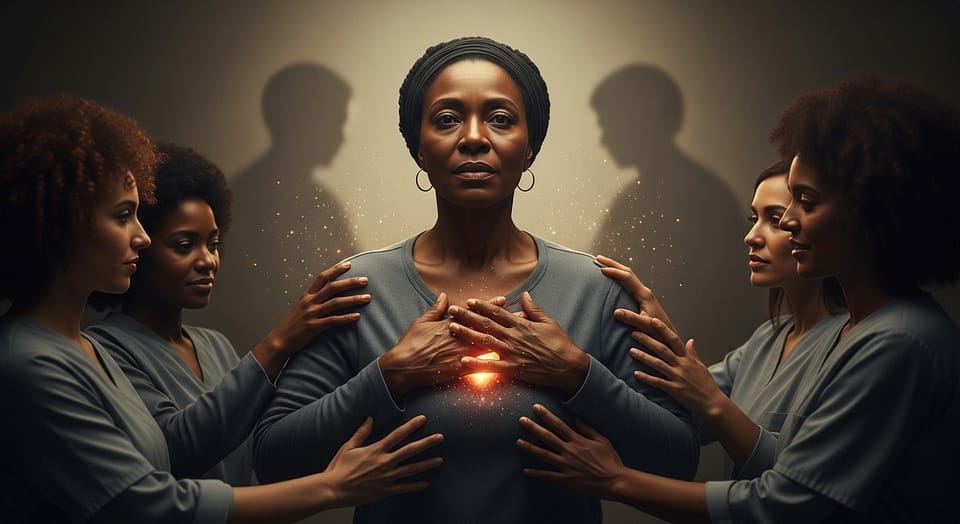
In 2021 alone, cardiovascular disease claimed 931,578 lives in the United States — more than all cancers combined. Behind this staggering number is a truth we must confront:
Nearly 59% of Black women age 20 and over live with some form of cardiovascular disease.
The highest rate across all racial and gender groups.
Pause there.
More than half of Black women are living under the weight of a deadly risk. This includes our mothers, sisters, aunties, grandmothers, best friends, and coworkers. They did not choose this risk and often do not fully understand it.
Yet, like they always do, they keep moving.
They keep showing up.
They keep raising families, leading communities, building nations.
But even the strongest heart can only carry so much before it breaks.
Why Black Women Carry the Heaviest Burden
This crisis did not happen by chance. It is the direct product of biology, racism, inequity, gender bias, and the crushing weight of “strong Black woman” expectations. It is also the result of medical systems that have historically overlooked Black women’s pain.
Below are the forces creating this perfect storm.
1. Hypertension — The Uncontrolled Storm
Black women experience the highest rates of hypertension in the country, and only 25% have it under control.
High blood pressure is not a minor issue. It tears at arteries. It overloads the heart. It triggers strokes, heart attacks, kidney disease, and maternal death.
For far too many Black women, hypertension becomes a silent sentence. This happens simply because of the body they were born into. It is also influenced by the society they live in.
2. Obesity and Weight Stigma
Nearly 57% of Black women live with obesity — the highest among all groups.
But this number tells only a fraction of the story.
It ignores:
- food deserts
- chronic stress from racism
- unsafe neighborhoods
- generational trauma
- a health system that sees “weight” but not the woman
- cultural pressure to always “be strong”
The blame placed on Black women is not only unfair — it is deadly.
3. Diabetes — The Slow Erosion
Black women are significantly more likely to develop Type 2 diabetes and far more likely to be undiagnosed.
By the time many receive the diagnosis, their cardiovascular system has already endured years of silent damage.
4. Stroke — A Threat That Doubles
Black women face twice the rate of stroke compared to white women.
Not later in life — now, and at younger ages.
Stroke is no longer an “older person’s disease.” For Black women, it is a clear and present danger.
Maternal Health: Where the Crisis Becomes Catastrophe
Cardiovascular disease is the leading cause of maternal death in the United States. For Black women, the maternal mortality rate is 3.5 times higher than for white women.
These are women who did everything right:
- attended appointments
- asked questions
- followed instructions
And still — they died.
Most from preventable conditions linked to high blood pressure, such as:
- preeclampsia
- eclampsia
- peripartum cardiomyopathy
A Black woman can enter a hospital to give life… and leave her family grieving a preventable loss.
No woman should fear her own pregnancy.
No partner should bury the mother of their child.
The Hidden Barriers Black Women Face in Healthcare
Black women are not dying simply because of disease.
They are dying because systems fail them long before symptoms appear.
1. The Yentl Syndrome — Being Believed Only When Symptoms Look “Male”
Cardiology research has historically focused on men. As a result, the “classic” heart attack symptom — crushing chest pain — is a male presentation.
Black women often experience:
- jaw pain
- back or neck pain
- nausea
- dizziness
- shortness of breath
- extreme fatigue
Too often these symptoms are dismissed as:
“Stress.”
“Anxiety.”
“Indigestion.”
And while women fight to be heard, minutes tick away toward disability or death.
2. Stigma — The Silent Enemy
Nearly 40% of Black women report shame surrounding high blood pressure.
Shame becomes silence.
Silence becomes avoidance.
Avoidance becomes tragedy.
Many fear being judged as irresponsible. They worry about being seen as “not taking care of themselves.” As a result, they hide their diagnosis — even from family.
3. After the Heart Attack: No Access to Rehab
Cardiac rehabilitation reduces mortality by 32%, yet only 11.9% of Black women participate.
Why?
- Lack of provider referrals
- Insurance barriers
- Culturally unwelcoming spaces
- Feeling isolated in all-white or male-dominated groups
A life-saving resource becomes out of reach.
The Financial Toll: A Nation Losing Billions

From 2019 to 2020, heart disease cost the U.S. $422.3 billion in direct and indirect expenses.
This is more than many nations’ entire GDP.
But the real cost is emotional — the birthdays missed, the empty chairs, the families forever altered.
The Blueprint for Saving Lives
We already know what works. The question is: will we act?
1. Fix the System — Not the Woman
Healthcare must:
- Automatically refer women to cardiac rehab
- Recognize women’s unique heart symptoms
- Train providers in culturally competent care
- Expand telehealth and home-based rehab
- Track racial disparities
- Recruit and support more Black cardiologists
Black women do not need more lectures.
They need systems that see them, hear them, and protect them.
2. Personal Empowerment — A Roadmap to Heart Health
The American Heart Association’s Life’s Essential 8 provides powerful, achievable steps:
- Don’t smoke
- Move daily
- Eat whole foods
- Maintain a healthy weight
- Prioritize sleep
- Manage cholesterol
- Control blood pressure
- Control blood sugar
This is not about blame.
It is about self-love, survival, and refusing to let statistics write your future.
3. Community Education and Cultural Literacy
We must normalize conversations about:
- family health history
- symptoms
- nutrition
- safe exercise
- medical mistrust
- how to advocate in clinical settings
And Black women must be supported to:
- ask questions
- demand testing
- seek second opinions
- insist that their pain be taken seriously
The Final Word: Listen to the Numbers, But Act for the Women

Heart disease is stealing the lives of Black women — leaders, caregivers, elders, innovators, dreamers.
But this is not a story of defeat.
It is a story of awakening.
When we name a crisis, we can fight it.
When we challenge bias, we can dismantle it.
When we give women knowledge, we give them power.
When we give communities tools, we give them life.
The silent killer is only silent when we stay quiet.
AMHG refuses to stay quiet.
Now is the moment.
Now is the movement.
Now is the time to save Black women’s hearts —
and save Black women’s lives..