






Living Through Collapse: 5 Realities Shaping Haiti Today
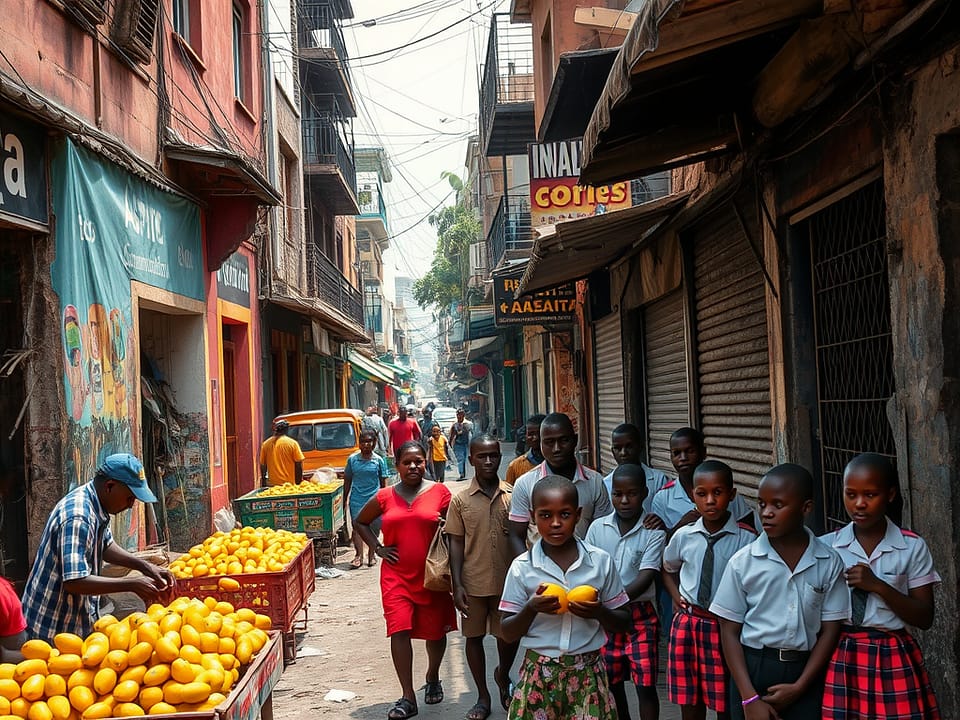
In the vibrant, chaotic streets of Port-au-Prince, life persists with a defiant, rhythmic intensity. Vendors hawk mangoes beside charred storefronts, and children in pristine school uniforms navigate alleyways scarred by gunfire. This is the “Afro Mosaic” in its rawest form—a society where human resilience is the only thing left standing after the scaffolding of the state has rotted away. Life continues, but it does so in a vacuum of protection.
As a global correspondent, I have seen many “failed states,” but Haiti represents a unique, multi-layered erosion. It is not just a political crisis; it is a systematic dismantling of the human right to survive. To understand the gravity of the situation, we must look past the headlines of gang warfare and examine the cold, startling data that defines the daily struggle for the Haitian people.
The Invisible Doctor: A Functional Zero in the Crossfire

In much of the developed world, we take the presence of a physician for granted. In Haiti, the doctor is becoming a ghost. The data reveals a staggering physician density of approximately 0.23 doctors for every 1,000 people.
In the context of an active conflict zone, this number is effectively a functional zero. When violence erupts in neighborhoods like Cité Soleil, 0.23 doesn’t represent a waiting room; it represents an impossibility. For those caught in the crossfire or suffering from sudden illness, medical help isn’t just delayed—it simply does not exist. The scarcity of professionals turns every minor infection or treatable injury into a life-or-death gamble, hollowed out by the reality that the healers have either fled or are barricaded behind the same walls as their patients.
The High Stakes of Motherhood: The Lottery of Birth
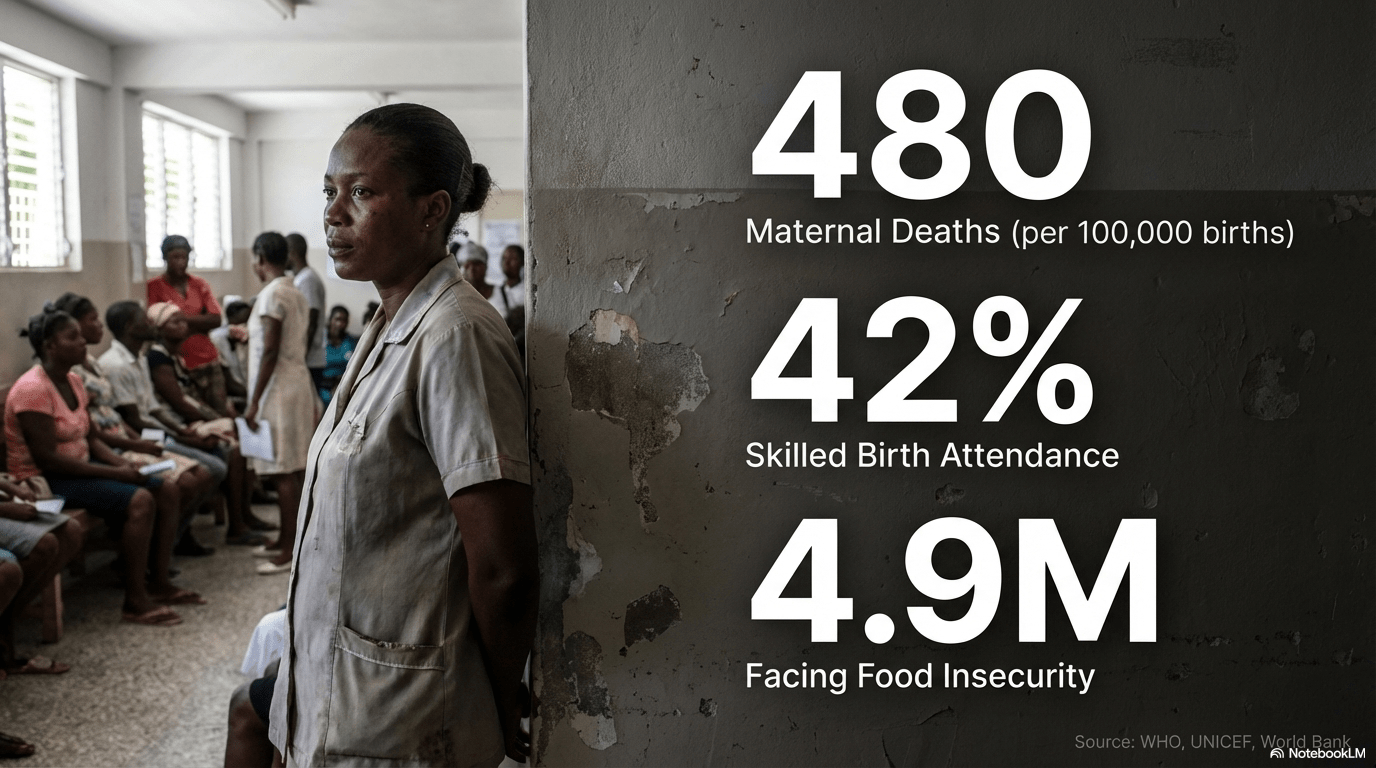
In Haiti, the act of bringing life into the world has become one of the most dangerous things a woman can do. The maternal mortality ratio has climbed to approximately 480 per 100,000 live births, a figure that reflects a catastrophic breakdown in maternal care. With only 42 percent of births attended by skilled personnel, the majority of Haitian women are left to navigate the “lottery of birth” alone.
These deaths are rarely the result of exotic diseases; they are the result of preventable complications—hemorrhages and infections that a basic clinic could manage. But in a landscape of economic paralysis and blockaded roads, the distance to a hospital is often measured in lives lost rather than miles traveled.
“The journey to a delivery room is a gauntlet of checkpoints and cost. For many mothers, the price of safety is higher than a family can pay, turning a preventable complication into a family tragedy.”
A Nation Under-Nourished: The Future-Robbing Metric
Physical survival is being undercut by a silent, slow-motion disaster: hunger. Approximately 4.9 million people—nearly half the nation—are currently facing acute food insecurity. Driven by stratospheric inflation and a reliance on informal work that is frequently interrupted by violence, families are forced to choose between fuel for a stove or a single bag of rice.
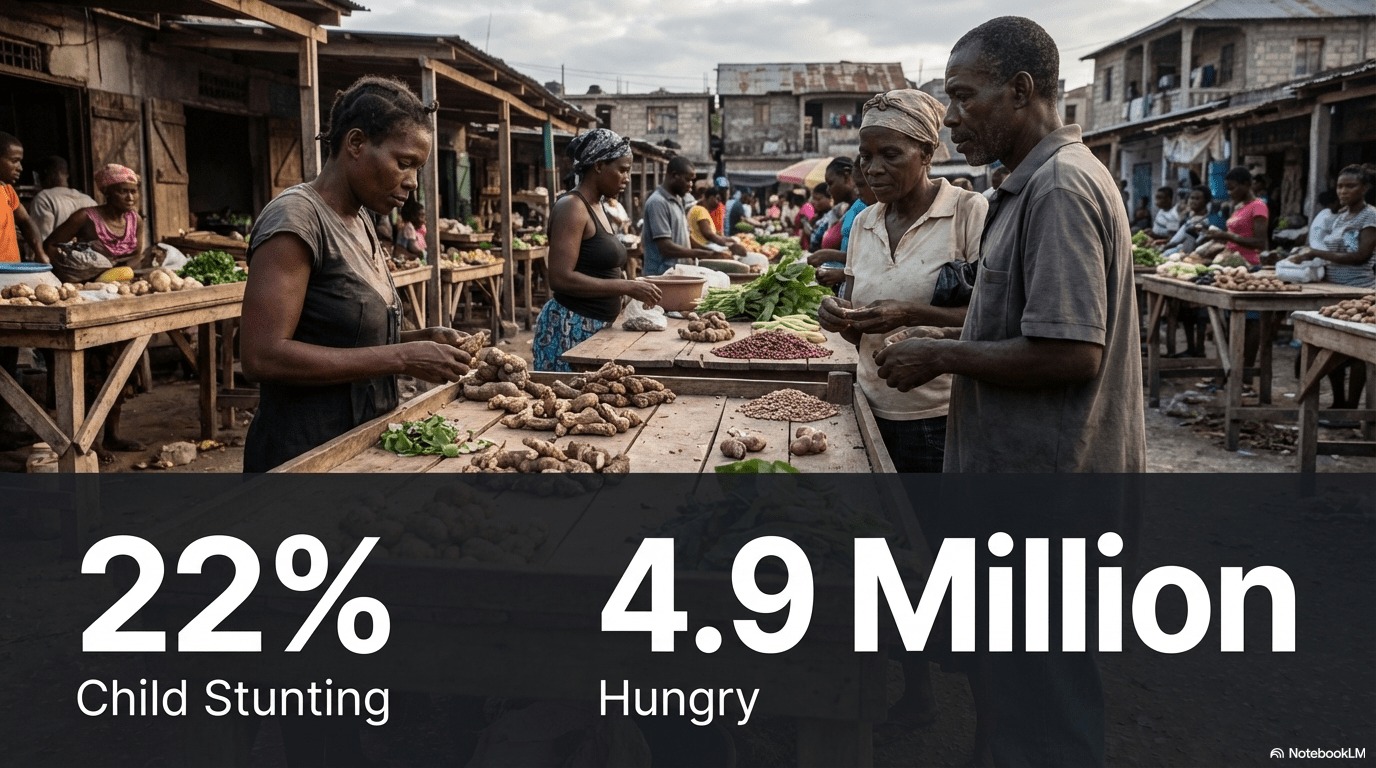
The most harrowing statistic is the 22 percent child stunting rate. Stunting is a “future-robbing” metric. It is the permanent physical and cognitive signature of neglect. When a fifth of a nation’s children are deprived of essential nutrients during their most formative years, the damage is not just individual—it is geopolitical. We are witnessing the literal shrinking of a generation’s potential before they even reach adulthood.
Healthcare in the Crosshairs: The Price of Global Neglect
Even the structures built to save lives are under siege. Over half of the healthcare facilities in conflict zones are now partially or fully closed. While local violence is the immediate cause, the deeper culprit is a profound sense of global neglect.
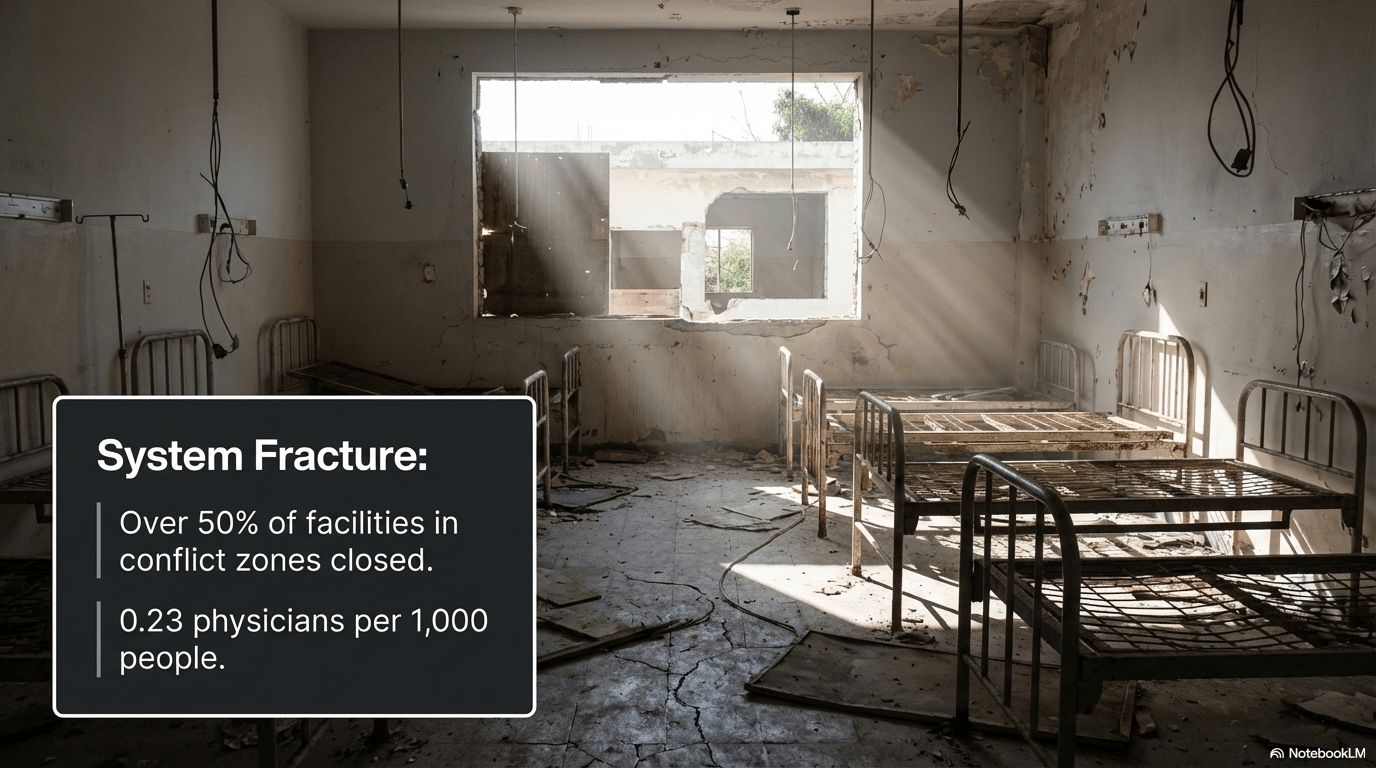
These clinics don’t just close because of bullets; they close because they run out of oxygen, bandages, and bandages. Humanitarian funding gaps and inconsistent international support mean that when a facility is looted or a generator fails, there is no safety net to catch it. The world’s attention spans are short, but the “Quiet Collapse” of a hospital is a permanent loss for the community it served.
“Haiti’s crisis shows what happens when protection systems fail but life continues. It is the ultimate testament to human endurance in the face of systemic abandonment.”
The Four-Pillar Collapse: A Row of Falling Dominoes
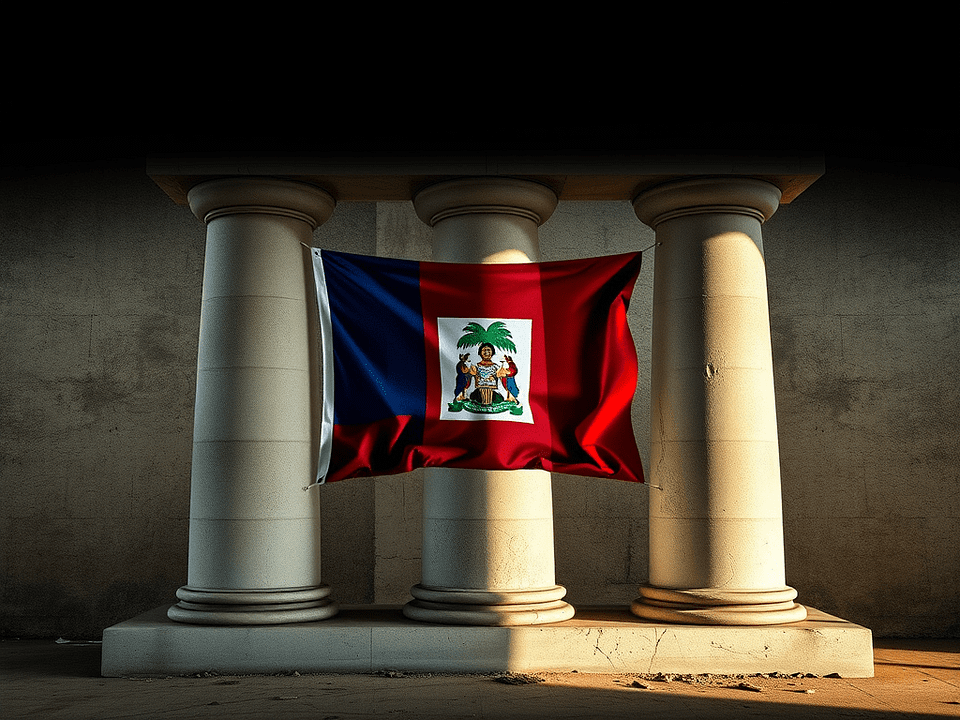
To view Haiti’s plight as strictly a “health crisis” is to miss the forest for the trees. What we are seeing is a synchronized failure across the Afro Mosaic Four Pillars: Health, Legal, Social, and Economic.
It is a row of falling dominoes. The Legal failure (a lack of governance and protection) leads to the Economic failure (the inability to work safely), which places an unbearable Social strain on communities, eventually manifesting as the Health crisis we see in the clinics. Without a legal framework to ensure safety or an economic system to provide stability, any medical intervention is merely a bandage on a hemorrhaging artery. Sustainability is impossible without the restoration of the system as a whole.
A Forward-Looking Reflection
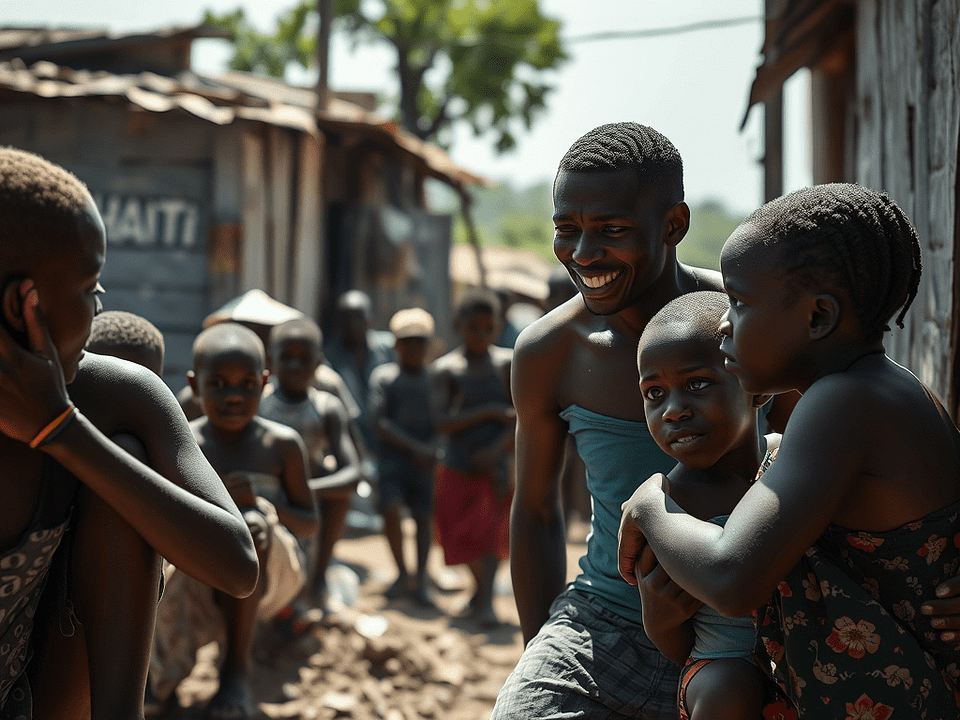
Haiti is a sobering mirror held up to the international community. It proves that human resilience, while awe-inspiring, is not a substitute for a functioning state. Strengthening these systemic pillars is the only way to move from a state of perpetual emergency to one of actual protection.
As we look at the data—the 0.23 doctors, the 4.9 million hungry, the 22 percent stunted—we must ask ourselves a piercing question: Are we prepared to accept a world where an entire nation is relegated to “survival without a system,” or will we find the collective will to help them rebuild the pillars that sustain life itself?
Afro Mosaic: The Cascading Collapse of Haiti
This is not just a story about Haiti—it’s a warning about what happens when systems fail.
In this episode, you’ll see how health, food, safety, and survival are all connected—and how their breakdown impacts real lives every day.
Why watch?
Because understanding this crisis means understanding how survival begins, how systems shape outcomes, and why protection must come before it’s too late.
This is more than news.
It’s a reality that demands attention—and action.