

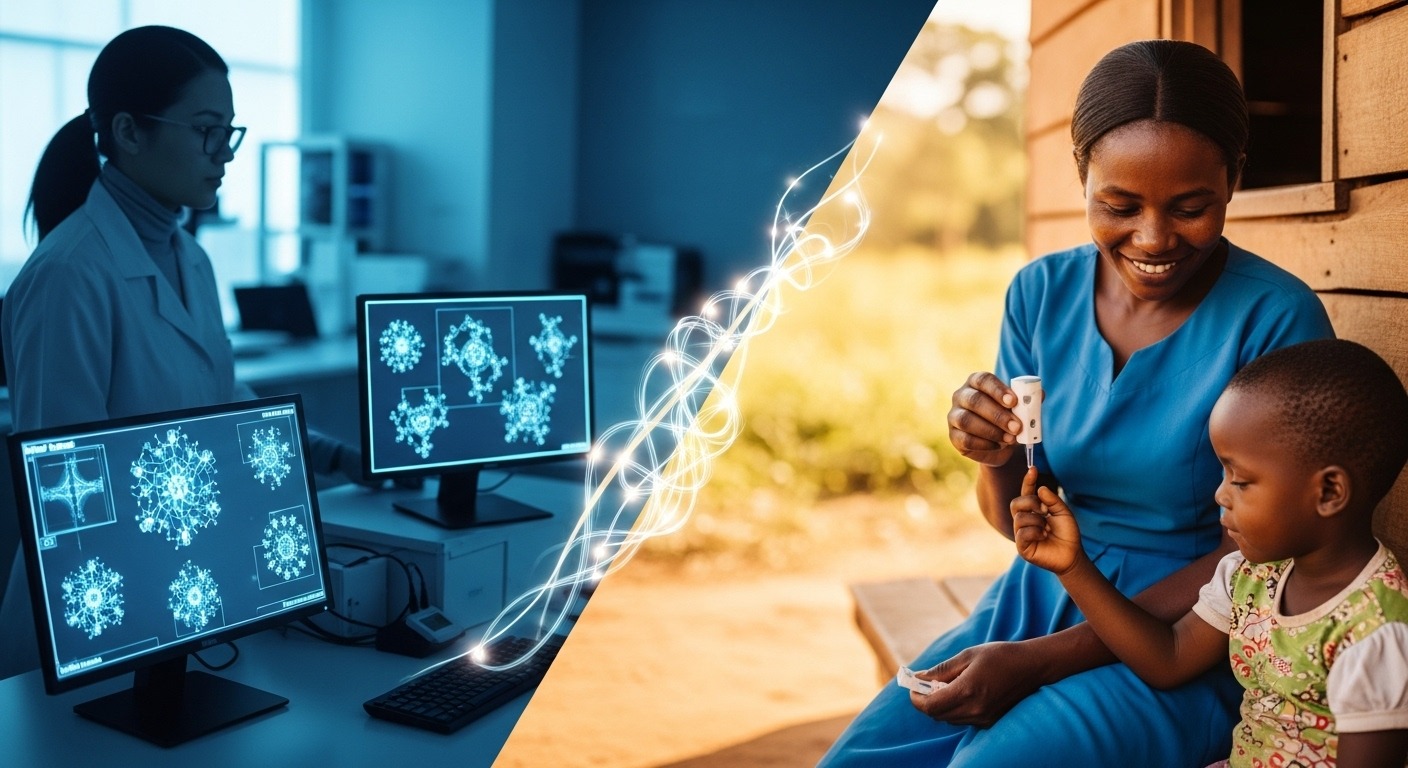
In late 2023, history was made when the U.S. Food and Drug Administration (FDA) approved the first gene therapies for Sickle Cell Disease—a milestone decades in the making. These treatments, Casgevy (using CRISPR gene editing) and Lyfgenia, offer something once unimaginable: the potential for a cure.
Both therapies work by re-engineering a patient’s own blood stem cells to restore normal red blood cell function, freeing them from the endless cycle of pain crises and hospital visits.
Dr. Terrence Blake, one of the lead investigators in the trials, described the moment as “a rewriting of human possibility.”
“For the first time,” he said, “we can talk about a world where people with sickle cell live without the daily fear of pain, stroke, or premature death. This is not science fiction anymore—it’s science realized.”
Still, access remains a barrier. The cost of these therapies—reaching into the millions—puts them far out of reach for most patients globally. The next step, experts argue, must be equitable distribution and affordable access, especially for regions with the highest burden.

Tools of Detection: From Labs to Local Clinics
While high-tech cures are on the horizon, early and accurate diagnosis remains the backbone of care. Modern science is expanding the toolkit:
- Traditional screening techniques such as the sickle solubility test and hemoglobin electrophoresis are still widely used for initial detection.
- Genetic testing now confirms the presence of SCD or carrier status with near-perfect accuracy.
- Point-of-care innovations—simple, low-cost devices that can detect SCD within minutes using just a drop of blood—are revolutionizing rural healthcare access.
These advances hold particular promise for resource-limited countries, where laboratory infrastructure is scarce but community health workers can reach families quickly.
Dr. Nadia Clarke, a molecular biologist developing portable SCD tests, emphasizes that “technology must serve humanity, not the other way around.”
“A test that saves a child’s life in Accra or Kingston,” she says, “is worth more than a hundred studies that never leave the lab.”

The Human Face of Hope
In Kingston, Jamaica, 16-year-old Kareem Brown knows the weight of Sickle Cell Disease all too well. Diagnosed at birth, he has spent more nights in the hospital than in his own bed. Yet his smile is unshakable.
“The pain comes and goes,” Kareem says, “but I’ve learned that I’m stronger than it. I want to study medicine one day—to help other kids like me.”
His mother, Marcia, credits education and community support for their resilience. Through local outreach programs, she learned how to manage Kareem’s symptoms, maintain hydration, and recognize warning signs early.
“Knowledge is what saves us,” she says simply. “If we didn’t know, we’d lose him.”
Across the Caribbean and African diaspora, families like the Browns are proving that awareness and advocacy can turn survival into empowerment.

Breaking the Silence: The Power of Community
Grassroots organizations, health ministries, and advocacy groups are now pushing to make Sickle Cell Disease a priority on the global health agenda.
In Canada, Black health networks are calling for more research funding and culturally sensitive care models. In Nigeria, mobile screening units are visiting rural villages to identify newborns early. And in Jamaica, national awareness campaigns are tackling stigma and educating schools.
It’s a movement powered by one truth: when people know better, they do better.
A Call to Action: The Future Is in Our Blood

Sickle Cell Disease has stolen too many dreams, too many young lives, too many tomorrows. But today, science, ethics, and humanity are finally aligned toward a shared goal: freedom from pain.
The cure is no longer a fantasy—it’s within reach. What we need now is equity, education, and empathy to ensure every community shares in that miracle.
So, as you read this, remember: Awareness saves lives. Screening saves futures. Advocacy changes destinies.
Join AMHG Magazine, community leaders, and global partners in the fight to end Sickle Cell Disease—because no one should be born with pain written into their blood.