








We are honoured to welcome you back to Series 8 of our Impacts on the Global Black Lifespan Journey. Our 52-week mission remains steadfast: tracing the health trajectory of the Global Black Diaspora from the first breath of birth through a vibrant, protected life of 100+ years.
In this feature, our lens focuses on South Africa—a nation that stands as a global beacon of public health resilience. As we examine the extraordinary progress made in infectious disease management, we must pause to ask a central editorial question:
When infectious disease becomes chronic harm — who ensures protection continues?
The Survival Victory: Progress as a Premise
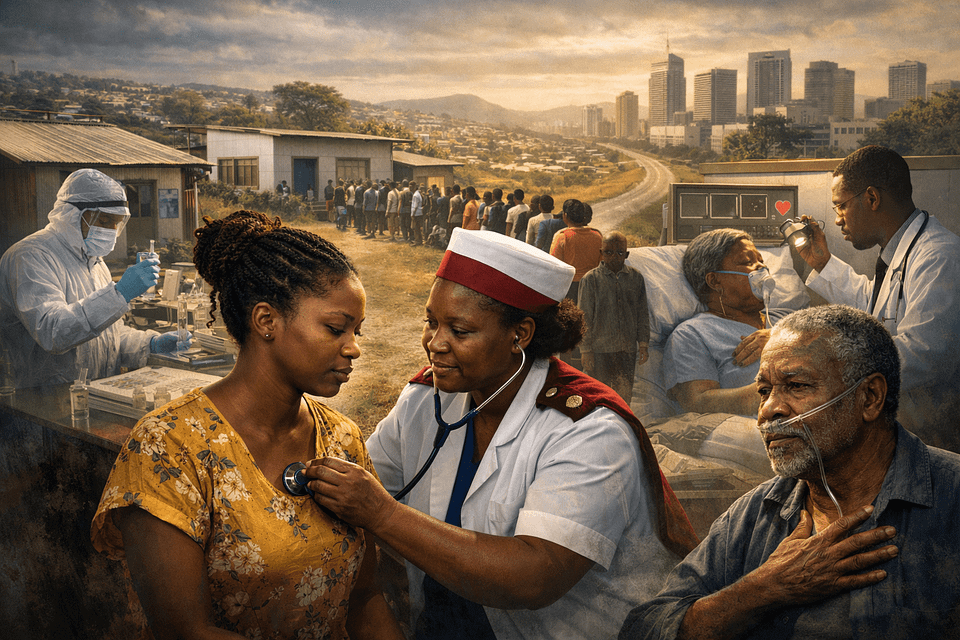
The history of health in South Africa over the last two decades is a testament to the power of collective will — community-driven, institutionally supported, and globally recognized.
HIV has been transformed from a fatal diagnosis into a manageable chronic condition. Antiretroviral Therapy (ART) coverage is among the strongest in the world. Viral suppression rates are high. The U=U (Undetectable = Untransmittable) movement has lifted stigma and empowered millions with clarity and dignity.
At the same time, TB recovery initiatives are working to identify and treat those previously missed by the system. National life expectancy is rising. For many communities, the most devastating crisis years have passed.
Survival is progress.
But survival has revealed a secondary challenge.
We call it The Silent Overlap — the intersection where surviving infectious disease meets the rising risks of hypertension, diabetes, stroke, heart disease, and chronic lung damage.
The Lifespan Transition & the Institutional Age Gap
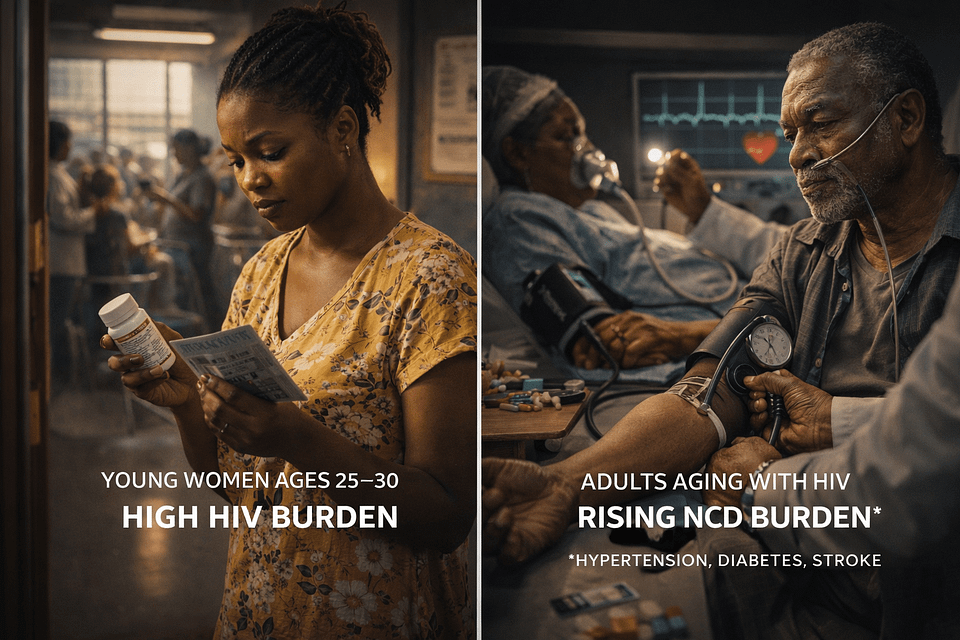
South Africa is now experiencing a demographic shift that many systems were not originally designed to handle.
Young women between the ages of 15 and 35 often navigate the healthcare system as caregivers — ensuring children and partners are tested and treated, while quietly neglecting their own rising blood pressure or weight gain.
Among adults aged 50 and older, the long-term physiological effects of surviving infection are beginning to surface.
The ART system has been undeniably successful — but it remains largely vertical. It focuses on viral suppression while the rest of the body continues to age.
This creates what we call an institutional age gap.
The system was built for crisis management.
It must now evolve for aging management.
The Lifespan Shift: A Narrative of the Unseen

Imagine a young woman diagnosed with HIV at age 25.
She survives. She thrives. ART works.
But over three decades, her immune system remains subtly activated. Her metabolism shifts. Her blood vessels endure slow, persistent strain. If her clinic monitors only her viral load — but never her blood pressure — she could face an accelerated risk of stroke by age 55.
This is not a failure of her body.
It is a failure of a system that has not yet fully transitioned from infection control to lifespan protection.
The Medical Mechanics: The Residual Costs of Survival
The “Silent Killers” that follow infectious survival are not personal shortcomings. They are residual costs that require systemic response.
Chronic Inflammation
Even when HIV is suppressed, the immune system may remain on quiet alert. Over time, this persistent low-level inflammation can stiffen blood vessels and strain the heart.
Metabolic Shifts
Certain long-term ART regimens may influence how the body processes sugar and fats. This does not undermine the life-saving importance of ART — but it signals the need for metabolically responsive treatment plans and weight monitoring.
Lung Resilience
TB is curable. But recovery often leaves structural strain in the lungs. Protection means including long-term respiratory monitoring and rehabilitation in TB recovery protocols.
Systemic Oversight
For many South Africans, ART clinics are their primary contact with healthcare. A missed blood pressure check during a routine visit is not biological inevitability — it is a systems gap.
Stigma as Structural Pressure

At AMHG, we reframe stigma.
It is not a personal flaw.
It is structural pressure.
Stigma drives clinic avoidance. It influences disclosure fears. It reinforces the expectation that women prioritize the health of others before their own.
The gendered caregiving burden — especially in multigenerational households — delays preventive screenings.
Stigma is structural pressure — not personal weakness.
If we have achieved U=U for the virus, we must now demand stability and control for blood pressure and blood sugar.
Public health dashboards must evolve beyond infection tracking to include cardiometabolic risk monitoring for every patient aging with HIV.
Systems & Accountability: The Four Pillars of Protection

True protection requires accountability across the pillars of Health & Wellness and Economic Power & Access.
A stroke is not just a medical event.
It is a social and economic turning point.
When a breadwinner experiences a cardiovascular event, income disappears overnight. Transport costs rise. Specialized care becomes expensive and logistically challenging.
Compounding this is what we call the obesity-poverty paradox. In many communities, food insecurity pushes families toward high-carbohydrate, low-nutrient diets that accelerate metabolic risk. No individual can “exercise away” structural food inequity.
Systems must evolve to account for the environments shaping health outcomes.
What Protection Looks Like: Actionable Advocacy
Protection requires integrated, lifespan-based care.
We encourage families to adopt an Integrated Community Protection Plan:
- Demand Integrated Screening: Every ART collection or TB follow-up visit should include blood pressure and blood sugar checks.
- Prioritize Lung Health: TB survivors should request periodic respiratory assessments.
- Monitor Treatment Pivot Points: Discuss metabolically responsive ART options if experiencing significant weight or energy changes.
Questions to Ask Your Clinician

- “I have been living with HIV for 10 years — how is my kidney function and blood pressure today?”
- “Since I have a history of TB, what are we doing to monitor my lung health long term?”
- “Can we integrate my hypertension screening into my regular ART script collection?”
Integrated care is not a luxury. It is the next phase of protection.
The Urgent Response: Stroke Warning Signs (FAST)
When the Silent Overlap leads to crisis, speed becomes protection.
Remember FAST:
- F – Face: Is one side of the face drooping? Ask the person to smile.
- A – Arm: Is one arm weak or numb? Ask them to raise both arms.
- S – Speech: Is speech slurred or unusual? Ask them to repeat a simple sentence.
- T – Time: If you see these signs, seek emergency help immediately.
Time preserves brain function.
Time protects independence.
Closing Reflection: Survival is a Milestone
In South Africa — and across the Global Black Diaspora — survival is our victory.
But protection is our goal.
Survival allowed us to reach this stage of the Global Black Lifespan Journey. Now our systems must evolve to match the resilience of the people they serve.
Protection must extend from first diagnosis to hundredth year.

Join the Journey
We invite you to follow our Impacts on the Global Lifespan Journey series every week as we continue examining the systems shaping Black health across generations.
- Visit us at amhg.ca
- Follow us on YouTube, Facebook, and Twitter X
Thank you for your time, your engagement, and your commitment to protecting our collective future.
We will see you next week as our series continues.